What Comes Next

Talk about economic whiplash. Life was going so well before the global pandemic for many people. The economy was strong, unemployment rate was low at 5.2%. Low for Canadian standards. Restaurants were bustling, there was always a line up to get lunch from the local restaurants and parking lots were full. The cheap lots were at max capacity before 9am and expensive lots full by 10am. To get a table at a restaurant you’d either have to show up early or show up late. I miss the din of a busy restaurant. The connection you make with the person you are with, the waitstaff and even with those around you whether you knew them or not. When will we be able to do that again.

Excessively busy transit system before the pandemic hit.

I drove to work on the rare occasion and took transit most of the time. The transit system was busy, it was not uncommon to have to wait for the next bus or subway car because there were just too many people on board. This was pre-pandemic and then the music stopped. It really was like playing musical chairs. We were running around too busy living and in the last few days before the city shutdown, there was that extreme anticipation that you may or may not have a chair to sit on. The days leading up to knowing whether we will be sent home, either to work from home or get furloughed or laid-off were anxious and long, paired with the realization that things will no longer be the same.

Miraculously my workplace was able to transition most of the employees to work from home. This would have been difficult if not impossible if this pandemic happened when internet was not as common. Connection speeds have increased so much if you were able to upgrade your access. You need a good connection if you and your partner and kids are on the internet daily. 

Empty bus during pandemic.

Internet is becoming a great connector in every single aspect of our lives. We are working from home, doing banking and depositing cheques from the comfort of home. All my accounting is done online and signed with an e-signature. I do my exercises by following gym classes on YouTube, my kids do online lessons through Google Classroom and stay connected with their friends with FaceTime. There are online video games and movies. There are even massive concerts you can attend.  My son attended a Travis Scott concert with 12 million other people during this pandemic through Fortnite. Imagine monetizing that and advertising to such a huge demographic.

We will adapt and the world might become unrecognizable when we are done. This pandemic accelerated the adoption of the internet like no other catalyst. Even politicians are having meetings online

No one can predict what comes next but I know that the economy can swing from one extreme to another. We are in the middle of the depths of a shock we’ve never seen. I’m hoping that the other side could be such a contrast to this despair like a boom in the economy that also only happens once every one hundred years. In the meantime, we wait and survive and innovate and hope for a better future.

Early Memory of Banking

I must have been a toddler when my mom had to take me to the bank. She was a stay at home mom so I had to go everywhere she went. The banking hours way back in the 1970s were far and few between compared to today’s bank hours. That’s where the term banking hours came from. They used to be open between 10am and 4pm, so that’s why I was dragged to the bank in the middle of the day while my dad was at work. He would give my mom very specific instructions on what do to. She would usually carry the instructions on a piece of paper. My dad said he ordered gold bullion from Bank of Nova Scotia and my mom would go and pick it up. It might have been a trendy thing to do, not sure but Bank of Nova Scotia was a pioneer in the public lending of gold.  

Scotiabank coat of arms

We were not rich by any means but when I asked my dad how he could afford certain things, he would tell me he has no vices. He doesn’t smoke or drink so that’s how he was able to save and buy some luxuries. We lived within our means and I never felt deprived of anything. Having rich friends from two income professional families who pressured him to spend more money, or buy a bigger home or a nicer car, never swayed him from his financial goals.

So there I was at the bank as a little girl, my earliest memory of banking. I remember a line of people and when we got to the teller I was too short to see them. The one thing I loved about going to this particular local bank was studying the coat of arms that decorated the wall at my eye level while my mom did the transactions. In fact, I thought they placed the art there just for kids like me, to keep them occupied. The coat of arms was from the Bank of Nova Scotia now called Scotiabank. I remember the regal looking animals on it, the knight’s helmet, and the intricate details. I traced everything with my finger until I had to leave. There was a unicorn representing bravery, innocence and purity among other traits. It likely represents the banks connection to the early Scottish settlements in Nova Scotia, the unicorn is a symbol of Scottish heraldry

It was pretty magical for me to see in a bank office that was for the most part stark. It definitely left an impression on me that this institution loves animals, just like me, and is whimsical but also protective. 

Scotiabank no longer uses their coat of arms in their advertising. Bank branches try to exude modernity, clean lines, comfort but not too comfortable, simplified colour schemes and absolutely no whimsy. Maybe the coat of arms started to feel outdated or too reminiscent of the Royalty. Art demonstrates its power to convey lasting and strong messages. 

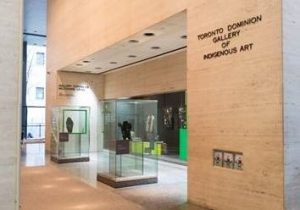
Toronto Dominion Gallery of Indigenous Art

Banks are not without art today. Downtown banks still impress with their vaulted ceilings, lofty architecture and sculpture and art galleries. The TD bank has an amazing public art gallery. I only found out about it when my oldest child attended a downtown daycare at the TD centre. The whimsy and magic of banks is readily found in some of the old head offices. Might be an unusual day trip idea but it’s worth a detour.

If you are interested to read about Bank Of America’s incredible art collection, I found an article about their curator, Allen Blevins, who definitely has an interesting job. 

Do you have a good early memory of banking?

Art should not be underestimated. It makes you feel things, it makes you think and it would be nice to see more of it at the bank branches. Maybe the head offices can arrange for artwork to be displayed at smaller branches. It might motivate me to visit more often. What is your earliest memory of banking? Did you have a bank account as a child? Did your parents talk to you about money? I think our early experiences with money and banking really influences our future relationship with finance. I hope your relationship with your money is a healthy one. 

Making Mistakes When Investing

From the time we are little, we try not to make mistakes. I guess it depends on the kid but I was one of those kids who tried not to make a mistake on tests or tried not to colour over the line. My kids don’t have that problem. They may pretend to make mistakes just to see my flabbergasted face. I now see how being a perfectionist is problematic for many things in life. 

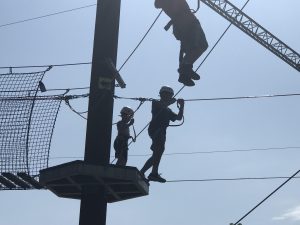
Children begin a challenging course. Get from A to B. Sounds easy but there will be difficult obstacles along the way just like investing.

One day, one of my children came home with a spelling test and he got a zero out of five. I was surprised and said honey, you got all of them wrong. He replied, no mommy, they are all…incorrect. He seemed to think he did well because he had more incorrect answers than anyone else in the class. I was not like this child at all. I’m happy he goes on in life unperturbed about making mistakes. It makes a great lesson for investing. It’s okay to make mistakes when investing especially when you are young and just starting out. 

Retain the Ability to be Wrong and Move On

Being a kid is about learning from your mistakes and being able to move on with life and try again. When investing you also have to accept that making mistakes is totally acceptable and you will only get better at investing once you make some basic ones. When I realized I made a trade in error, I called the brokerage and explained what I tried to do and they helped me correct it without any extra charges. 

There must have been some apprehension to learn how to use a Penny Farthing Bicycle. I’m sure it wasn’t that easy to get started but look how fun it looks now.

At one time, I sold a stock and got the ticker symbol wrong. I had two stocks with similar tickers. I ordered a sale of a stock and not only did I get the ticker wrong but I tried selling more than I owned of the stock, so in essence I was short selling. I realized minutes after and called the brokerage and they set everything straight, I don’t think they even charged me for all the extra orders that had to go through to fix my mistake. Other times, I’ve sold a poorly performing stock only to see it sky rocket way beyond what I originally paid for it months later. I realized that I should have had more patience and if I’m not willing to hold a stock for the long term then I shouldn’t buy it. 

Times are Always Uncertain, But Some Times are More Uncertain Than Others

I’m still investing twenty years later in extremely “uncertain times.” However, I don’t recall there ever being “certain times” in which to invest in. It’s okay to make some mistakes when investing, give yourself that leeway. Learn from making mistakes and learn from other people’s mistakes too. As long as you stay invested for a very long period, things should work out well and maybe even better than you could have anticipated, with all your mistakes and all the market crashes and corrections accounted for. Stay invested and as one investing giant has said, “just stay the course.”

Saving and Investing is a Super Power

Saving and Investing is a Super Power

Money is a sensitive topic to talk about isn’t it, and unless you work in the financial sector it is a pretty awkward subject to bring up with just about anyone. Since no one really talks about it, it seems like maybe it’s not that important. I think that finding an interest in investing is truly a super power with all this secrecy going around. I know you have that super power in you. 

What makes it a super power is that it won’t reveal itself as a super power until later, much later. At first, when you start to save and invest you will feel powerless and it may even feel pointless. ‘Who cares I set aside $1000, that’s not a lot of money’, you’ll say. You may have it invested, and its market value could go down. ‘What’s the use!”, you’ll say to yourself each time you lose money. There will be many times when it will seem FUTILE. The super power happens when all those feelings of hopelessness are set aside and you continue to save and invest despite the mixed signals in the news and despite what your gut is telling you to do. It is a super power to keep on doing it because of the news telling you that “cash is king”, or that only real estate is a real investment because you can see it and touch it. Saving and investing in the stock market is a very abstract concept, and the ability to see its growth potential and imagine the effects of compounding is not easy. Let’s use the help of a compound interest calculator to help us see this super power in action.

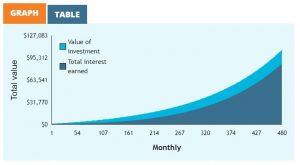
Graph of our results from getsmarteraboutmoney.ca

Let’s assume you started working and after a year, you managed to save $500. You’ve opened a self-directed RRSP and have a bit of contribution room. You add $500 to your RRSP and for the next 40 years you add $500 every year. You are young and new to investing but heard that investing in a stock market index is a good idea because you basically own many companies at once. Perhaps you purchase an S&P500 ETF index every year with your $500. Your total cash investment after 40 years is $20,000. Many of you will not consider $500 a lot of money, it looks manageable doesn’t it? I’m sure you can do that and have the motivation to do even more. How much do you think you’ll have after 40 years of letting your money compound? We have to make some assumptions here however, we have to imagine that the stock market will return let’s say 7% on average for the next 40 years. If you are lucky enough to get a 7% return on your money, your $500 per year investment would turn into $105,902.58. Isn’t that amazing?

Take the time to play with this compound calculator and figure out how much you can save per year. Make sure to use money you can part with for decades. The best result is if you save more than less of course, and much depends on stock market returns (something you have no control over). Investopedia is a good resource to look up handy information about investing. I used a 7% return because adjusted for inflation, the historical average annual return is only around 7%”

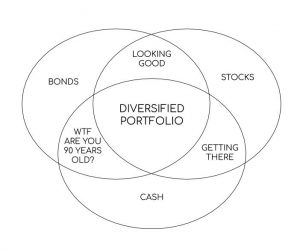
Venn Diagram of investing

After 40 years of saving and investing your stock portfolio can be chopped in half. I know, totally sucks! Let’s assume this happens but you are patient and will wait for a market recovery. According to Greg McBride: Typically, it takes stocks an average of 121 days, or four months, to recover from a correction. If a downturn becomes a bear market, which is when stocks fall 20 percent or more from a high, it takes an average of 22 months, which is less than two years, to recover.Dec 19, 2018”  

You don’t have control over what the stock market hands you, I guess it is a huge leap of faith, one that I took many years ago and I’m not going to lie, it’s a crazy ride. As Morpheus said in the Matrix, “Free your mind”

Investing in Stocks Through a Global Pandemic

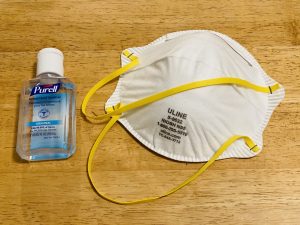
Well sought after items during this pandemic.

If someone told me that in my lifetime I would live through a global pandemic directly affecting me, my family, society and country, I would not believe it. I would think they are just a crazy conspiracy theorist with a death wish. Yet here I am experiencing first hand a pandemic the world hasn’t seen in 100 years. 

Investing in stocks for the long haul

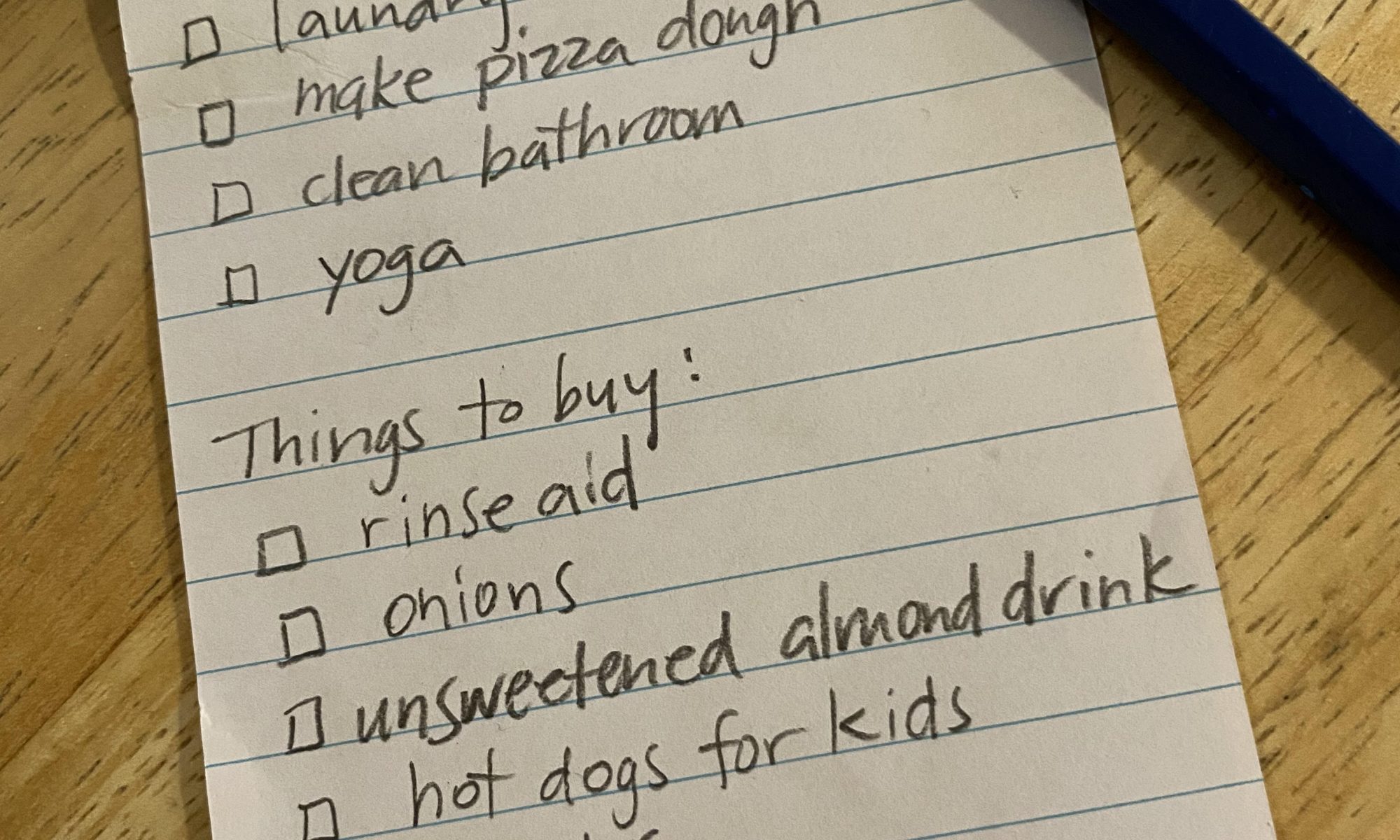
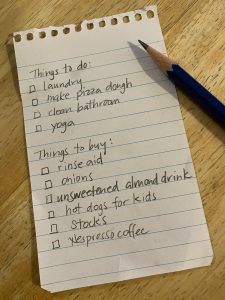
Making a list of things to do and things to buy help make things happen.

I am sometimes surprised at myself that even during these crazy times, I am a stock investor. These are the exact scenarios that scare people from investing in the stock market, and yet here I am, after twenty years of investing, sticking to my wits and investing more now than ever.  Is it a good idea to invest in stocks during a pandemic? Maybe I’m the crazy one?

I’m so grateful I have a job that can be done from home but there is a nagging feeling of insecurity. It would come as no surprise if the project I’m working on gets cancelled, or delayed by a few months. After schools got cancelled, stock markets crashed, playgrounds were cordoned off, gyms shuttered, all international flights cancelled, and our shared border with the US closed to non-essential travel, there is nothing left that can surprise me. Our lives have turned upside down within a couple of weeks. Nothing is the same, except for the laundry. 

After a crash, is it a good idea to keep investing?

When the stock market started to crash this year, I told myself to start getting excited about investing in stocks. Here comes an opportunity of a lifetime to get in at the ground floor. I try to train my reaction to the stock market to be opposite of what one would expect. I don’t want to fear another stock market crash again, I want to embrace it.

How past experiences inform me about investing in stocks

I’ve seen this before in 2008 and I was an emotional wreck for a few nights but I’ve learned from that experience. Look at this Maclean’s headline: Canada’s stock market collapse is like nothing we’ve ever seen before. Like nothing we’ve ever seen before? In the 2008 crash when the Dow went down 50% and down 27% in the 2001 crash, while the NASDAQ crashed 44% in the Dot-Com bubble. Crashes happen in the stock market, and sometimes they happen for no reason at all. How about this headline for amping up the fear factor: A Hellish Week for Markets Isn’t Over Yet. Interestingly, the headline predicts there will be more ‘hell’ to come, but no one actually knows. We only know what happens in hindsight. Let’s think about the negative use of the word ‘hell’. When your favourite shoe (let’s say Nike) is in a clearance sale of 50% off and they have your size, would you describe that as ‘hell’? HELL YA more like it. So next time the stock markets crash, say it with me, “HELL YA!”.

Invest in your health and your family first

I shouldn’t belittle the grim fact that trillions of dollars were lost in the stock market, but this time around I feel numb to the volatility. It’s just money and I’m certainly more concerned about the health of my family and extended family, and friends more than anything else in this world. My portfolio has taken on an abstract meaning and pretty much just does what it does. I don’t have control over market swings so I try not to waste time worrying about it. I will continue to invest what I can in stocks during these tumultuous times but as always, I should be putting a priority on my health. The 80s movie Princess Bride had some great lines and here’s one.  Get some sleep. If you haven’t got your health, you haven’t got anything.

Stay safe, take care of yourself, we will get through this.